A Holy Sacrifice
-
-
Ever heard of Mass referenced as "The Holy Sacrifice of the Mass"?
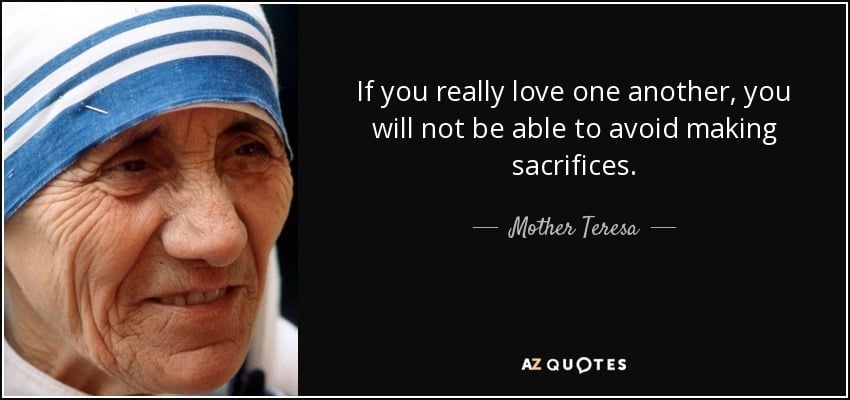
When we hear the word "sacrifice" in a religious context, our minds may go to Old Testament "visuals" of animals (oxen, sheep, goats, doves, and pigeons) offered in the temple for "atonement of sins, thanksgiving, and purification."Another context of "sacrifice" may be more personal and relevant to our lives today: what we do (or do not do) for the "good" of others and even ourselves.Generally speaking, our sacrifices, whether big or not, are rooted in love. -
-
-
-
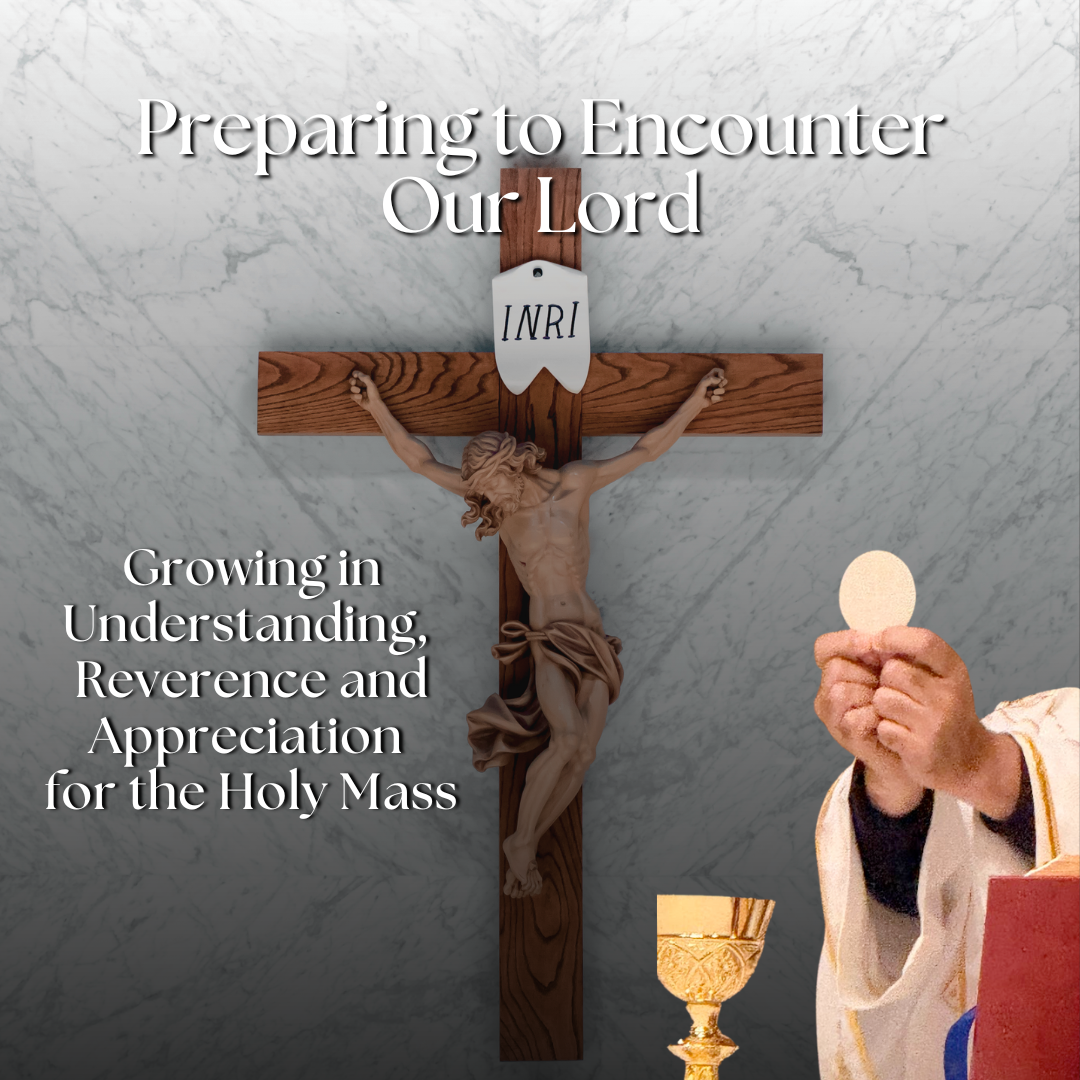
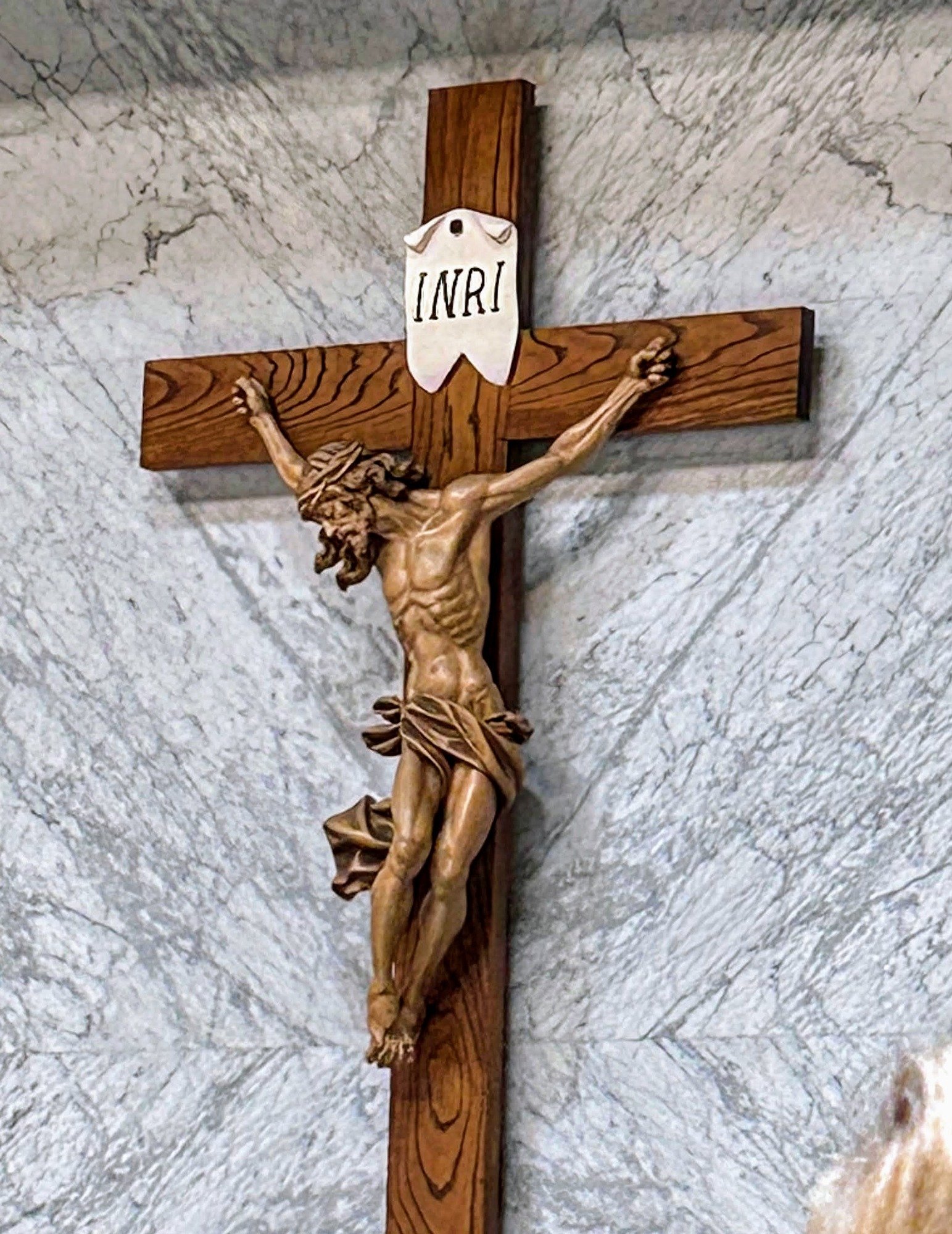
When we enter our church, we are met with the striking "living image" of the Crucifix above the altar, where Jesus hangs on the Cross. Many of us were taught from childhood that His death was "the ultimate sacrifice" made out of love: a sacrifice to save us from sin and to open the way to eternal life.So, if that sacrifice already took place once and for all close to 2,000 years ago, why is Mass, celebrated every day, referred to as a Holy Sacrifice?
-
-
The Mass is how that one sacrifice of Jesus on the Cross becomes present to us today, every time Mass is celebrated. It’s not just remembering something that happened long ago—God allows us to enter into it as a personal and communal encounter here and now and receive its grace.
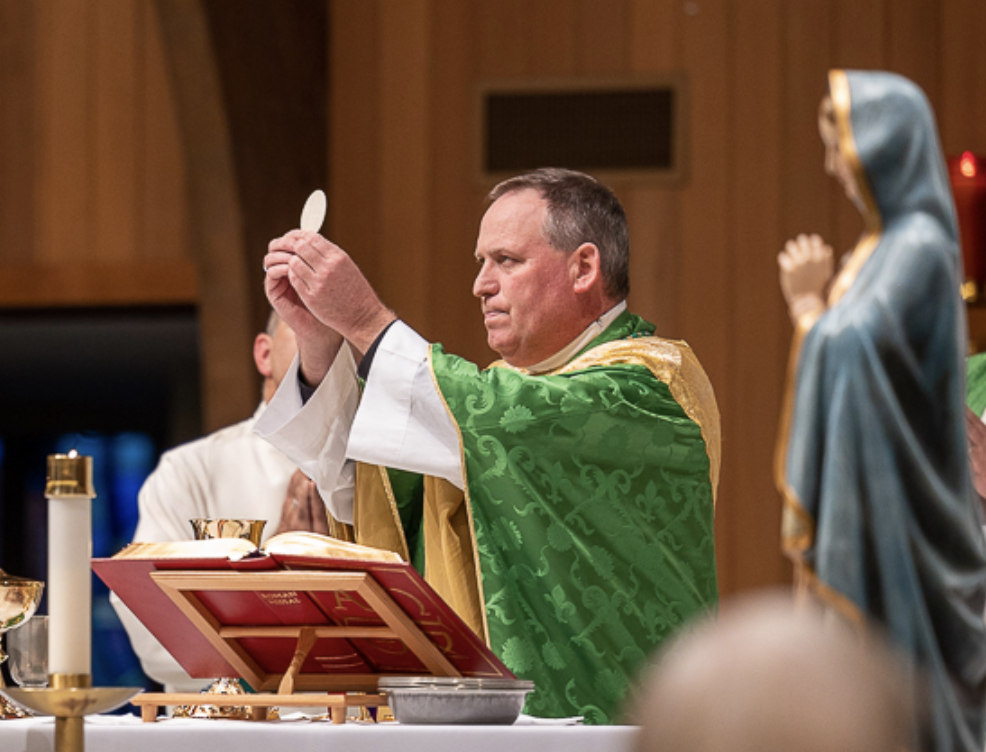
At the Mass, bread and wine are offered, and we, as Catholics, believe God transforms them into His Real Presence and own self-gift: His Body and His Blood. This is how Jesus continues to give Himself to people—not symbolically, but in a present, deeply real and spiritual way. -
-
-
-
-
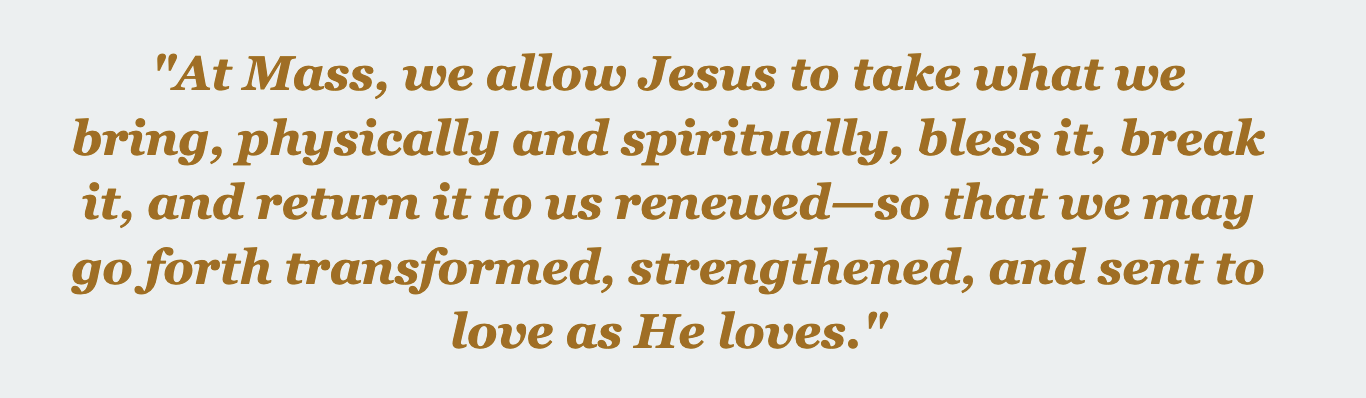
We, too, are invited by Jesus to participate in this encounter -- in this giving of sacrifice -- by offering ourselves, our own sacrifices; our gifts, our fruits, our joys, our fears, our sorrows, with great intention and love, while deeply rooted in ultimate gratitude.
-